Best Smart Rings 2025: Top 5 for Sleep Tracking and Contactless Payments
Best Smart Rings 2025: Top 5 for Sleep Tracking and Contactless Payments
Choosing a smart ring comes down to one question first: health tracking or contactless payments? Oura Ring 4, SOXAI RING 2, Galaxy Ring, and Ultrahuman Ring AIR center on sleep, heart rate, and skin temperature — while EVERING is built exclusively for Visa tap-to-pay. Same finger, very different jobs.
The first question to ask when picking a smart ring isn't "which one is best" — it's whether you want health tracking or contactless payments. Oura Ring 4, SOXAI RING 2, Galaxy Ring, and Ultrahuman Ring AIR are built around sleep, heart rate, and skin temperature data. EVERING does Visa tap-to-pay and nothing else. They're all rings on your finger, but what they actually do couldn't be more different.
This guide is for people who want better sleep, those who find wearing a smartwatch to bed uncomfortable, and anyone who wants to figure out where EVERING fits — or doesn't. We'll compare all five products in a side-by-side table, break down the differences in price, subscription costs, OS compatibility, and battery life, and go deep on sizing, data integration, measurement limits, and privacy — everything you need to land on the right ring for your life.
What Is a Smart Ring? How It Compares to a Smartwatch
Core Features
A smart ring is a wearable device shaped like a finger ring. Its job isn't notifications or app control — it's continuous body data: sleep, heart rate, activity, and skin temperature. Oura Ring 4, SOXAI RING 2, Galaxy Ring, and Ultrahuman Ring AIR all fall into this category, designed to stay on around the clock, including while you sleep.
Tracked metrics vary slightly by product, but the fundamentals are consistent. Typical measurements include sleep duration and depth estimates, resting heart rate, heart rate variability (HRV), steps and calorie burn, and skin surface temperature changes. Galaxy Ring, for instance, packs an optical heart rate sensor, accelerometer, and temperature sensor, and claims up to seven days of battery life. SOXAI RING 2 targets continuous PPG monitoring, skin temperature, and blood oxygen — all inside a 6.7mm-wide, 2.7mm-thick body weighing around 2.1–2.7 grams. The numbers tell the story: this is impressively small hardware for what it does, which helps when you're wearing it to bed.
That said, not every "smart ring" is the same type of device. EVERING is a Visa tap-to-pay ring with no health sensors at all. So even within the smart ring category, health tracking and payment-only models are fundamentally different tools. Getting that distinction clear upfront keeps the comparison from getting muddled.
Most health-tracking rings pair with a smartphone app — the ring captures data, the app analyzes and visualizes it. Oura integrates with Apple Health, and SOXAI RING 2 explicitly supports it too. Think of a smart ring as a small sensor on your finger: the app's quality matters as much as the hardware.
The most obvious difference from a smartwatch is the absence of a screen. Smartwatches are miniature computers — time display, notification handling, touch input, app launching. Smart rings, by design, have no display. You're not checking anything on the ring itself; it's quietly recording while you go about your life. If you want a device that handles information at your wrist, a smartwatch is the right tool. If you want something that logs your health without demanding attention, a smart ring makes more sense.
Battery behavior also differs. Smartwatches burn power through their screens and notification processing, requiring daily or every-few-day charging. Without a display, smart rings last considerably longer. Oura Ring 4 claims up to eight days, Galaxy Ring up to seven, Ultrahuman Ring AIR around six, and SOXAI RING 2 up to fourteen. In practice, Galaxy Ring fits naturally into a once-a-week charging rhythm; Ultrahuman Ring AIR needs a charge every six days or so. Charging less frequently than a smartwatch is a genuine quality-of-life difference in daily use.
On accuracy: the finger is considered a good location for optical sensors because blood vessels run close to the surface, which is why smart rings tend to perform well for continuous sleep and heart rate tracking. That said, a note of caution is warranted. Smart ring readings are not a substitute for medical tests — they're trend indicators for understanding your sleep and health patterns, not diagnostic tools.
Strengths and Limitations
The main appeal of a smart ring is compact, lightweight design that disappears into daily life. It doesn't get in the way during the day, and you can sleep with it on without much discomfort. There's also a secondary benefit: by wearing something that can't show notifications, you naturally reduce how often you're pulled into your phone. A smartwatch is useful precisely because it surfaces information constantly — a smart ring is useful for the opposite reason. If your goal is sleep and recovery tracking, that trade-off often feels like a feature, not a compromise.
The limitations are equally clear. No screen means no real-time workout data, no notification replies, no maps. If you want to check your pace and heart rate mid-run, a smart ring alone won't get you there. Everything goes through the phone app, which changes the kind of convenience you're getting.
Sizing is another constraint that smartwatches don't share. Smart rings need to fit precisely — loose enough to be comfortable, tight enough for the sensors to maintain reliable skin contact. A watch strap can be adjusted; a ring cannot. This isn't a minor detail. A poorly fitted ring doesn't just feel uncomfortable; it produces unreliable data.
💡 Tip
Smart rings suit people who are willing to give up real-time information display in exchange for uninterrupted sleep and health logging. If you want to see data at a glance throughout the day, a smartwatch serves that purpose better.
The right way to use smart ring data is over time, not in single-day snapshots. A sleep score that jumps around day to day is less informative than the pattern it traces over two weeks — a dip during a stressful work stretch, elevated resting heart rate after drinking, lower recovery scores when sleep timing slips. That's where the value becomes concrete. Smart rings are health awareness tools, not medical devices, and using them with that framing leads to more useful insights.
How to Choose a Sleep and Health Tracking Smart Ring
What to Measure — and How to Think About Accuracy
Picking a health-tracking ring by spec sheet alone is a reliable way to end up with the wrong one. The more useful starting point is: what numbers will I actually look at day to day? Common metrics include sleep score, heart rate, HRV, skin temperature, SpO2, and activity data. If your goal is understanding sleep quality and rhythm, the clarity of sleep scores and bedtime/wake time readouts matters most. If recovery and fatigue are the focus, how the app handles resting heart rate and HRV becomes the deciding factor. If you're also tracking physical activity, automated workout detection and calorie data come into play.
Each product has a slightly different focus. Oura Ring 4 has a strong reputation for sleep scoring and detailed analysis. Galaxy Ring integrates sleep, heart rate, skin temperature, and SpO2 within Samsung Health for a cohesive overview. SOXAI RING 2 and Ultrahuman Ring AIR both cover sleep, heart rate, HRV, skin temperature, and SpO2 broadly. Across the leading models, the raw measurement capabilities have converged — which means how the app interprets and presents the data is often what differentiates them in practice.
Approach accuracy with nuance. A single day's reading tells you less than a week's trend. What makes a smart ring useful isn't whether today's sleep score is precise to the percentage point — it's whether you can see that late nights correlate with lower scores, or that alcohol raises your resting heart rate the next morning. Measure what you'll actually use, and look for trends rather than daily verdicts.
Battery and Charging
Sleep tracking requires the ring to stay on at night. If the battery runs out and you take the ring off to charge while sleeping, you lose exactly the data you bought the device to collect. A five-to-eight day battery range is where charging becomes easy to forget about — in a good way. Oura Ring 4 claims up to eight days, Galaxy Ring up to seven, Ultrahuman Ring AIR about six, and SOXAI RING 2 up to fourteen. From a practical standpoint, anything below six days starts to require conscious planning; a week or more lets charging slot naturally into your weekly routine.
Charging method is worth checking too. Galaxy Ring uses a dedicated charging case — drop the ring in and it charges, similar to wireless earbuds. The case is portable and works well for short top-ups when traveling. Ultrahuman Ring AIR uses a charging dock with a quoted full-charge time of about 1.5 to 2 hours. SOXAI RING 2 also uses a proprietary charging cradle. What matters more than the specific mechanism is whether it's easy to set down nightly, travel-friendly, and fast enough not to be a hassle.
Galaxy Ring's size 12 and 13 variants are rated for up to seven days, making a once-a-week charging schedule realistic. Ultrahuman Ring AIR lands on roughly every six days. For a device you're supposed to wear continuously, battery life isn't just a spec — it directly affects how complete your sleep log stays.
Subscription Costs and Total Ownership Cost
Smart ring pricing doesn't end at the purchase price. Multi-year total cost is where the differences become significant. Oura is the clearest example: Oura Ring 4 is designed around a membership subscription, required to access detailed features. Based on listings at major Japanese retailers, the Oura membership runs ¥999/month or ¥11,800/year (~$8/month or ~$78/year USD).
The math compounds quickly. Oura Ring 4 starts at $349 USD. Add two years of annual membership and you're looking at roughly ¥23,600 (~$156 USD) more; three years adds around ¥35,400 (~$234 USD). The hardware price is just the entry point — ongoing membership cost is the real variable when comparing long-term value. Galaxy Ring, Ultrahuman Ring AIR, and SOXAI RING 2 are all subscription-free, which makes the total cost straightforward to calculate.
Whether a subscription is worth it depends on what you get. If Oura's app analysis genuinely changes how you manage sleep and recovery, the recurring cost may be justified. If you mainly want to see sleep time and a rough heart rate trend, a subscription-free option likely delivers that without the ongoing expense. The subscription feels minor at first — six months or a year in, it becomes a meaningful part of the ownership experience.
OS Compatibility and Health Platform Integration
Smart rings only work as well as their companion apps — and compatibility with your phone's ecosystem matters more than most spec comparisons acknowledge. iPhone or Android shapes which rings make sense for you.
For a detailed perspective on choosing between iOS and Android, the site guide "iPhone vs Android: How to Choose for 3-5 Years of Use" covers the tradeoffs well.
Products that don't integrate directly with Apple Health tend to create fragmented data storage for iPhone users — sleep here, steps there, workouts somewhere else. If you want a unified health dashboard (sleep, steps, weight, workout history in one place), what matters isn't just the ring's measurement capabilities but where it writes data. This distinction rarely shows up prominently in spec tables, but over months of use it becomes one of the more noticeable quality-of-life differences.
Sizing and Fit
A smart ring that doesn't fit correctly doesn't just feel uncomfortable — it produces unreliable data. Unlike a watch with an adjustable strap, a ring has no flex. Skipping the sizing kit is the most common buying mistake, and it often leads to returns.
Don't pick a size based on your ring size from jewelry. Request the sizing kit, wear the sample rings for at least a full day — morning, afternoon, and evening — before deciding. Fingers change size throughout the day. A ring that feels right in the morning can feel tight by evening; one that's comfortable at noon may spin loose at night. For sleep tracking specifically, how the ring fits when you're lying down is the most important test.
Sensor contact matters most during sleep. A ring that's too loose will rotate on your finger, shifting the sensor away from skin contact. Too tight, and it becomes uncomfortable enough to wake you or prompt you to take it off. My approach with ring-type wearables is to prioritize "does it stay in place during sleep and when I flex my fingers" over "does it feel like I'm wearing nothing." Fit isn't aesthetic preference here — it's a measurement accuracy requirement.
Weight and thickness affect comfort too. A width of 6–7mm has some visual presence, but lighter and thinner models tend to minimize the awareness of wearing something. SOXAI RING 2 is 6.7mm wide, 2.7mm thick, and weighs roughly 2.1–2.7g. Galaxy Ring comes in at about 2.3–3.0g. At that weight class, most people stop noticing the ring during typing, household tasks, and sleep.
Water Resistance and Daily Wear
Think about water resistance in terms of which situations you won't have to take the ring off, not just whether it survives splashing. Handwashing, sweating, rain, workouts, showers, and baths each represent a different level of exposure. Galaxy Ring is rated at 10 ATM — the strongest water resistance in this comparison, genuinely suited to pool use and prolonged water exposure. Ultrahuman Ring AIR is rated to 100m. EVERING is rated at 5 ATM. For SOXAI RING 2, the manufacturer promotes bath and shower use, though the IP/ATM rating notation varies across pages — verify the current specification on the official product page before purchasing.
The key point for sleep tracking rings: you'll likely wear them all day, not just at night. Taking the ring off every time you wash your hands increases the chance of losing it or forgetting to put it back on. Higher water resistance means fewer moments where you're deciding whether to take it off — and fewer gaps in your data.
One Japan-specific note worth knowing: as of 2025, no smart ring has confirmed official support for FeliCa-based transit IC cards. EVERING's payment function uses Visa tap-to-pay, which is a separate system entirely. If you're hoping a smart ring will replace your transit card for train and bus travel in Japan, that isn't currently an option with any of these products.
Smart Rings Are Not Medical Devices
Smart ring numbers are genuinely useful — but they can become a source of unnecessary stress if treated as diagnostic verdicts. Sleep score, resting heart rate, HRV, and skin temperature changes are good for tracking your condition over time. They are trend data, not diagnoses. Oura's sleep score runs from 0–100 with rough benchmarks at 70 and 85, but a single score doesn't tell you definitively how healthy your sleep was last night.
Research on working adults in Japan puts average sleep duration around 6 hours and 50 minutes — which already leans toward chronic undersleepping for most people. A sleep ring isn't a tool for matching some average; it's a way to spot patterns in your own sleep timing and recovery quality.
ℹ️ Note
A low sleep score day becomes more useful when you look at bedtime, mid-night wake events, and what you did the day before. The context matters more than the number alone.
If you're experiencing persistent symptoms — difficulty breathing, strong fatigue, heart palpitations, unusual sleepiness — don't try to interpret smart ring readings in place of medical evaluation. These devices are designed to track daily variation, not to replace clinical assessment.
Privacy and Data Handling
Health data is meaningfully more sensitive than, say, location history. Sleep patterns, resting heart rate, skin temperature, SpO2, and activity rhythms collectively paint a detailed picture of your daily life. That makes where the data lives and what it's shared with worth examining before you buy — not just an afterthought.
Apple Health and Google Health Connect both require explicit user permission for each app's read and write access, which makes it easier to audit what's accessing what. That's a structural advantage for privacy-conscious users.
Payment rings add a different dimension. EVERING handles financial transaction data, which carries its own privacy considerations separate from health data. Even for health rings, the permissions requested during initial app setup vary — email address, device identifiers, health platform integration scope. How broadly an app reaches for permissions tells you something about how the company thinks about your data.
My habit with this category is to pay attention to the permissions screen during first launch. Does the app only read sleep and heart rate, or does it also write to Apple Health? Does it ask for location or notification access that isn't obviously necessary? A small ring accumulates a surprising amount of sensitive data over time — it's worth holding it to the same scrutiny you'd apply to a medical app.
Top 5 Smart Rings: Detailed Reviews
Oura Ring 4
Oura Ring 4 is the most recognized name in health tracking rings, and for good reason. It's built primarily around sleep and recovery — ideal for people who want a continuous read on how well they're bouncing back from daily stress and physical activity. The app is genuinely polished, with a clear read on whether today calls for pushing hard or backing off.
Reports from CNET Japan cited approximately 120% improvement in blood oxygen signal quality and about 15% improvement in respiratory disturbance detection accuracy, though those figures depend on measurement methodology and should be treated as directional rather than precise benchmarks. Apple Health integration is solid, making it a natural choice for iPhone-centric users.
The subscription is a real consideration. Oura Ring 4 starts at $349 USD (~¥52,000+), and the membership is required for the features most people buy it for — ¥999/month or ¥11,800/year (~$78 USD/year) based on Japanese retail listings. Plan for the total cost, not just the hardware.
SOXAI RING 2
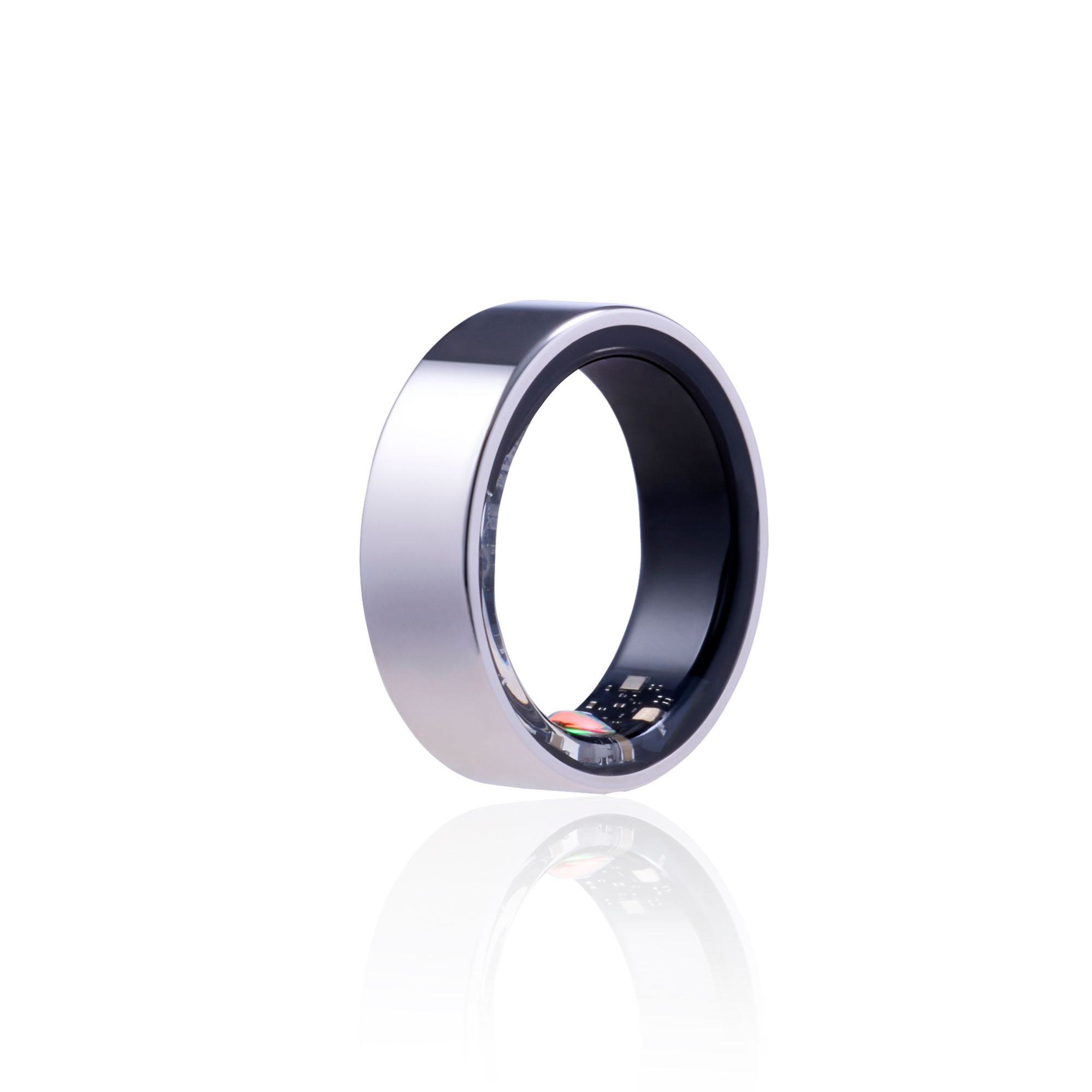
SOXAI RING 2 is the strongest option if you want a subscription-free health ring from a Japanese brand with Japanese-language app support. Its main use cases are sleep tracking and daily health awareness — and it keeps things financially simple from day one with no ongoing fees.
The standout specs are its weight, battery, and cost structure. At 2.1–2.7g, 6.7mm wide, and 2.7mm thick, it's light enough that most people stop noticing it during keyboard work and while sleeping. Fourteen-day claimed battery life is the longest in this comparison, and in real use with continuous sleep and daytime tracking, you can realistically go more than a week between charges.
Measurement coverage includes PPG sensing, heart rate, HRV, continuous SpO2 monitoring, and skin surface temperature — everything a sleep-focused health ring should have. Apple Health integration is explicitly supported, and it works with both iPhone and Android.
The trade-off: SOXAI's app hasn't had the same years of refinement as Oura's, and some users will find the depth of analysis or data presentation less convincing. Charge time per session isn't specified at the minute level in official specs. But the core value proposition is clear — a subscription-free, lightweight health ring from a domestic Japanese brand with solid fundamentals and straightforward pricing.
SOXAI RING 2
睡眠から心身の状態まで健康データを正確に取得・分析できる国内シェアNo.1の日本製スマートリング「SOXAI RING 2」。指輪型・最大14日間の世界最長バッテリー・完全防水で、健康管理を日常に。 ※初めて購⼊される⽅は必ずサイジングキッ
soxai.co.jpGalaxy Ring
Galaxy Ring is the obvious choice for Android users, especially those already in the Samsung ecosystem. It's designed around Samsung Health as the data hub, and if you're using a Galaxy phone or Galaxy Watch, the integration just works — no workarounds needed.
Sensors include an optical heart rate sensor, accelerometer, and temperature sensor, with blood oxygen monitoring as well. Sleep tracking is well-implemented, and the Energy Score feature gives a daily vitality read that's easy to check and act on. No subscription required, which keeps the long-term cost simple.
Battery life of up to seven days in sizes 12 and 13 makes a once-a-week charging rhythm realistic. Samsung's attention to detail shows in the per-size battery capacities: 18mAh, 19.5mAh, and 23.5mAh depending on ring size. At 2.3–3.0g and 7.0mm wide by 2.6mm thick, it has slightly more visual presence than some competitors, but it's still light enough that the physical weight isn't an issue in practice. 10 ATM water resistance means water around the house, in the pool, or in the shower is a non-issue.
Japanese retail pricing has been listed at ¥63,690 (~$421 USD) at Samsung Online Shop, with prices around ¥48,427 (~$320 USD) observed at comparison sites. Available through Samsung Online Shop, Galaxy Harajuku, Galaxy Studio Osaka, Amazon Japan, Yodobashi Camera, and Bic Camera — domestic distribution is well-established.
The limitation is iPhone compatibility. Apple Health integration isn't prominently supported, and the product is genuinely designed for Samsung Health as its primary data home. Galaxy Ring is a strong Android health ring, not a universal recommendation.
Galaxy Ring(ギャラクシーリング)一覧 | スマートリング | Samsung Japan 公式
最新スマートリング Galaxy Ringの一覧。睡眠中でも指に快適に装着して健康モニタリング、トラッキング、パーソナライズされた情報を提供。
www.samsung.comUltrahuman Ring AIR
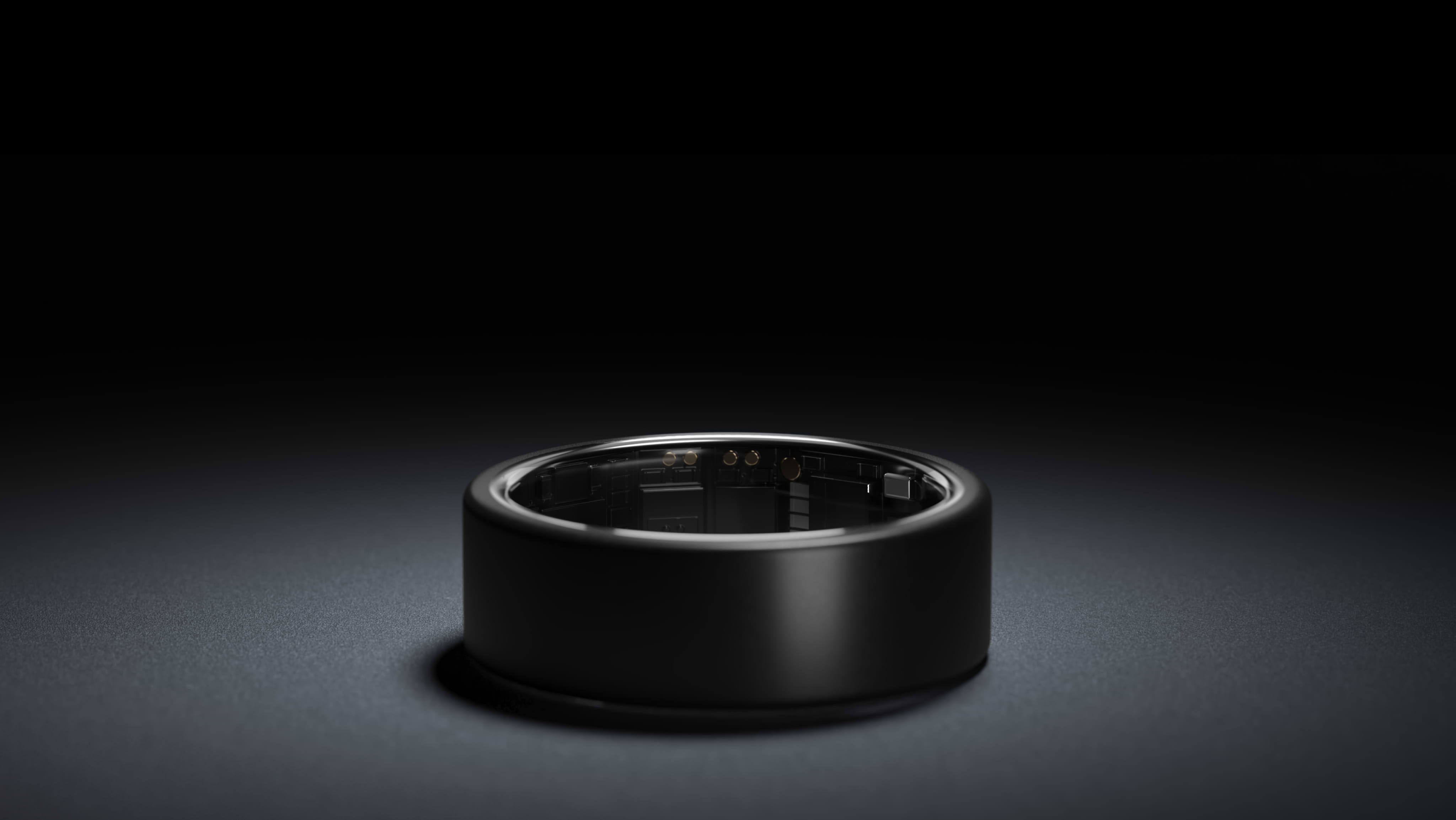
Ultrahuman Ring AIR targets the same space as Oura Ring 4 — advanced sleep and recovery tracking — without the subscription. That's its core appeal: high-capability health tracking as a one-time purchase.
Key metrics covered: sleep, heart rate, HRV, skin temperature, and SpO2. Battery life is around six days, which means one charge roughly every week — short enough to be a slight planning requirement, long enough not to be a constant concern. Charge time is about 1.5 to 2 hours with the included dock. At 2.4–3.6g and 2.45–2.8mm thick, it's slim enough for comfortable sleep wear. Rated to 100m water resistance, which covers any everyday scenario.
Cross-platform compatibility is a genuine differentiator. It works on both iOS and Android, and Apple Health sync for HRV, skin temperature, and energy expenditure is explicitly supported — meaning iPhone users who want to aggregate health data in Apple Health have a subscription-free option here. That combination (no recurring cost + Apple Health integration + Android support) is hard to find elsewhere.
Japanese pricing sits at ¥59,799 (~$396 USD) at SoftBank Selection, with Sourcenext and SoftBank-affiliated channels also carrying it. Domestic availability has improved. The trade-offs: lower name recognition than Oura in Japan, and after-sales support typically goes through distributors rather than directly. On the product itself, though, high capability, no subscription, works with both iPhone and Android is an unusually clean combination.
Ultrahuman Ring | Pricing
Ultrahuman Ring AIR is the world's most comfortable and compact smart ring that monitors your sleep, movement and r
www.ultrahuman.comEVERING
EVERING is the only ring in this group built around payments rather than health. It's a Visa tap-to-pay ring — not a health tracker. Sleep, heart rate, SpO2, skin temperature — none of those are supported. Comparing it to the other four on sensor specs misses the point entirely.
What it does, it does simply: no battery to charge, no software updates to a sensor array, no subscription. You tap to pay, and that's it. Five-ATM water resistance means handwashing and everyday water exposure aren't concerns. If your priority is removing friction from payments — not reaching for your phone or watch at checkout — the simplicity is the feature.
The limitation is equally clear: no health data, full stop. Anyone buying EVERING expecting sleep improvement insights or fitness tracking will be immediately disappointed. The companion app handles balance top-ups and transaction management, not health dashboards. EVERING isn't a lower-tier alternative to Oura Ring 4 — it's a different category of ring solving a different problem.
The choice is simple: if you want sleep and recovery data, pick a health ring. If you want to pay at checkout without pulling anything out of your pocket, EVERING makes that cleaner than any health ring will. Confusing the two categories is probably the most common smart ring buying mistake.
Side-by-Side Comparison
Comparison Table
Here's how all five products stack up across the factors that actually matter for a purchase decision. Seeing EVERING in the same table as the health rings also makes the category difference immediately apparent.
| Feature | Oura Ring 4 | SOXAI RING 2 | Galaxy Ring | Ultrahuman Ring AIR | EVERING |
|---|---|---|---|---|---|
| Price | From $349 USD (~¥52,000+) | Available at SOXAI official store | ~¥63,690 (~$421 USD) at Samsung Online Shop; ~¥48,427 (~$320 USD) at comparison sites | ¥59,799 (~$396 USD) at SoftBank Selection | Payment ring — check official site |
| Primary use | Sleep & health tracking | Sleep & health tracking | Sleep & health tracking | Sleep & health tracking | Contactless payments |
| Sleep analysis | Yes — detailed scoring (0–100) | Yes | Yes | Yes — sleep & recovery focused | Not supported |
| Heart rate / SpO2 / skin temp | All three | All three | Optical HR, SpO2, temp sensor | HR, SpO2, skin temp | Not supported |
| Battery life | Up to 8 days | Up to 14 days | Up to 7 days | ~6 days | No battery required |
| Subscription | Required — ¥999/month or ¥11,800/year (~$78 USD/year) | Not required | Not required | Not required | Not required |
| OS compatibility | iOS / Android | iOS / Android | Android-focused | iOS / Android | Managed via dedicated app |
| Apple Health / Health Connect | Apple Health supported | Apple Health supported; Android integration available | Samsung Health-centric | Apple Health supported; Android integration available | Not supported |
| Primary data home | Oura app | SOXAI app | Samsung Health | Ultrahuman app | Dedicated app for balance & transactions |
| Payment | Not supported | Not supported | Not supported | Not supported | Visa tap-to-pay |
| Water resistance | Everyday use | Bath use per manufacturer (verify IP/ATM rating on official site) | 10 ATM | 100m | 5 ATM |
Galaxy Ring pricing varies across channels — Samsung Online Shop, Amazon Japan, Yodobashi Camera, and Bic Camera each price differently, so checking current listings is more useful than any static figure. Ultrahuman Ring AIR is similarly best verified through Sourcenext or SoftBank-affiliated retailers domestically.
How to Read the Table
The most important thing the table communicates: don't evaluate EVERING on the same dimensions as the four health rings. Oura Ring 4, SOXAI RING 2, Galaxy Ring, and Ultrahuman Ring AIR compete on sleep and recovery tracking. EVERING competes on payment convenience. EVERING's "Not supported" entries under sleep analysis aren't weaknesses — they reflect a different product category.
Battery life is where the health rings separate themselves. Eight days for Oura Ring 4 and seven for Galaxy Ring mean sleeping with the ring consistently enough that gaps in your sleep log become rare. SOXAI RING 2's fourteen-day claim is the strongest here — if minimizing charging frequency is a priority, that's a meaningful differentiator. Ultrahuman Ring AIR's six days is sufficient for a weekly charging schedule. EVERING's no-battery-needed design is a different kind of convenience entirely.
Subscription cost has a compounding effect on satisfaction. Oura Ring 4 offers the most sophisticated sleep analysis but accumulates membership fees over time. SOXAI RING 2, Galaxy Ring, and Ultrahuman Ring AIR are buy-once products, which makes budgeting easier and removes the mental overhead of wondering if you're getting your money's worth from the subscription each month.
OS and data integration quietly determine long-term satisfaction. Oura Ring 4 and Ultrahuman Ring AIR both work well with iPhone and Apple Health. SOXAI RING 2 also explicitly supports Apple Health, making it viable for iPhone-first users who want a Japanese brand. Galaxy Ring's design is most coherent for Android — particularly Samsung Galaxy — users. Using Galaxy Ring as an iPhone user without Apple Health integration means your data doesn't flow into your existing health stack, which becomes frustrating over time.
Water resistance shows up as a minor spec but affects how often you take the ring off. Galaxy Ring at 10 ATM and Ultrahuman Ring AIR at 100m both handle any realistic daily scenario without hesitation. SOXAI RING 2's bath support claim similarly means fewer moments of deciding whether to remove it. More time on your finger means more complete data.
On pricing: Galaxy Ring and Ultrahuman Ring AIR are best understood through current retail channels rather than a single reference price. The subscription-vs-purchase-price comparison only tells the full story when you factor in whether there's a recurring cost on top.
Recommendations by Use Case
Best for Sleep Tracking
Oura Ring 4 is the strongest starting point here. The 0–100 sleep score presentation is clear, the app's analysis is well-structured, and the overall experience is the most mature of any ring in this category. CNET Japan reported improvements in blood oxygen signal quality and respiratory disturbance detection accuracy in the Ring 4 vs. Ring 3 comparison — useful directional data, though specific figures should be treated as manufacturer-reported rather than independently verified. Eight-day battery means your sleep log stays continuous. For iPhone users, the Apple Health integration is clean and reliable.
For sleep tracking without a subscription, Ultrahuman Ring AIR is a compelling alternative. Six high-precision sensors cover heart rate, HRV, skin temperature, and SpO2. Both iOS and Android are supported, with Apple Health sync for HRV, temperature, and energy data — useful if you want sleep data alongside other health metrics in one place. Charging roughly every six days fits a weekly schedule without much thought.
SOXAI RING 2 is worth considering if minimizing nighttime discomfort is a priority. At 2.1–2.7g and 2.7mm thick, it's among the lightest options. That size matters less for daytime wear and more for whether you notice the ring against a pillow or during sleep movement. Assuming the size fits well, this is the kind of ring that gets out of the way and lets the tracking do its job. And with fourteen-day battery, charging is rarely a sleep-night variable.
💡 Tip
When evaluating sleep rings, don't just count sensor specs or compare scores. Ask whether the app is something you'll actually open in the morning. Sleep data that's cumbersome to review tends to go unused — an app that makes recovery trends and rhythm changes easy to spot is where the real value lives.
All of these rings are consumer health devices, not medical equipment. They're useful for spotting patterns and informing lifestyle adjustments — not for clinical assessment.
Best for Budget-Conscious Buyers
Total cost matters more than purchase price. Oura Ring 4 starts at $349 USD (~¥52,000+) and adds annual membership on top. The subscription-free alternatives — SOXAI RING 2, Galaxy Ring, and Ultrahuman Ring AIR — are one-time purchases.
Within that group, SOXAI RING 2 offers the most favorable combination of price, capability, and low overhead. No subscription, solid sleep/heart rate/HRV/SpO2/skin temperature coverage, and a weight class that holds up for all-day wear. The fourteen-day battery claim further reduces the friction of ownership.
Galaxy Ring has a reference price of ¥63,690 (~$421 USD) at Samsung Online Shop, with prices around ¥48,427 (~$320 USD) at comparison sites — not inexpensive, but no subscription on top. For Android and Galaxy users specifically, the value equation improves once you account for the ecosystem integration you're getting without any added software cost.
Ultrahuman Ring AIR at ¥59,799 (~$396 USD) is a buy-once ring with Apple Health integration and Android support — a useful option for iPhone users who want Oura-adjacent features without Oura-adjacent ongoing costs. Domestic availability through Japanese retailers has improved, making pricing easier to verify.
One often-missed cost dimension: a sizing mistake is effectively money lost. A ring that doesn't fit well produces bad data and tends to get taken off — which defeats the purpose. Factor fit confidence into the budget calculation, not just the hardware price.
Best for Subscription-Free Users
If you want no monthly fees, the field narrows to SOXAI RING 2, Galaxy Ring, and Ultrahuman Ring AIR. All three are health rings with sleep, heart rate, and temperature tracking as their core. The differentiation comes down to OS, app ecosystem, and where your health data should live.
For cross-platform flexibility and depth of analysis, Ultrahuman Ring AIR wins. Apple Health sync for HRV, body temperature, and energy expenditure makes it usable for iPhone users who aggregate health data in one place. At 2.4–3.6g and 2.45–2.8mm thick, it's comfortable enough for overnight wear. Six-day battery and 100m water resistance round out a strong everyday spec. If you want subscription-free and you don't want to compromise on capability, this is the one.
For Japanese brand with domestic support, SOXAI RING 2 is the clear pick. Apple Health support, no subscription, and a design that prioritizes lightweight wearability. The domestic brand also means Japanese-language customer support and a product designed with local user needs in mind.
Galaxy Ring is subscription-free but ecosystem-specific. Its value shows up most clearly if you're already using a Galaxy phone and Samsung Health as your primary health data hub. Sleep tracking, SpO2, temperature, and 10 ATM water resistance are all competitive. If Apple Health is your data home, Galaxy Ring isn't the right fit.
Beyond the no-subscription benefit, subscription-free rings still need to deliver on battery life, water resistance, app readability, and data ecosystem compatibility to make the ownership experience genuinely good. A ring that doesn't get worn is just an expensive piece of titanium.
Best for Contactless Payments
For payments as the primary goal, EVERING is the right category. It's a Visa tap-to-pay ring, full stop — no sleep, no heart rate, no temperature. That's not a weakness; it's the design. The point is replacing your phone or watch at checkout with a tap of your finger.
Two things make EVERING specifically compelling as a payment device: it never needs charging, and it fits naturally into daily wear at 5 ATM water resistance. Other smart rings, regardless of how long their batteries last, require charging eventually. EVERING doesn't. For a device whose only job is to let you pay quickly, eliminating the charging variable makes the user experience clean.
The trade-off is the absence of health features. If sleep and recovery tracking matter to you, EVERING doesn't address that need at all. It's not a cheaper version of a health ring — it's a parallel product category. Managing balance and transactions happens through a dedicated app, completely separate from any health platform.
In Japan as of 2025, it's worth noting that EVERING's Visa tap-to-pay and FeliCa-based transit IC (used for trains and buses) are different systems. EVERING won't replace your Suica or PASMO at the turnstile. For commuters hoping to unify transit and payment in one ring, that isn't currently possible. Phone or smartwatch-based transit card functionality remains the practical solution for now.
Sizing for a payment ring is a different consideration than for a health ring. The goal isn't optimal sensor contact — it's natural positioning at the point of payment, without the ring feeling awkward when you extend your hand toward a reader.
If You're Still Undecided
Start with the binary: health tracking or contactless payments. Payments → EVERING. Health tracking → compare Oura Ring 4, SOXAI RING 2, Galaxy Ring, and Ultrahuman Ring AIR.
Within the health ring category, the decision tree looks like this: deepest sleep analysis and most polished app → Oura Ring 4; subscription-free, lightweight, Japanese brand, iPhone/Android → SOXAI RING 2; Android and Samsung Health as your ecosystem → Galaxy Ring; subscription-free, Apple Health integration, works on both platforms → Ultrahuman Ring AIR.
If one name has to be called the most broadly applicable, SOXAI RING 2 is the default recommendation for most buyers. Subscription-free, light, covers the core health metrics, works with both iPhone and Android. Oura Ring 4 outperforms it on sleep analysis depth, Galaxy Ring wins on Samsung ecosystem fit, Ultrahuman Ring AIR edges it on cross-platform analysis integration — but SOXAI is the least likely to disappoint someone who hasn't yet identified one of those specific needs.
The decision variables: measurement scope, battery, subscription cost, OS compatibility, water resistance, data integration, fit, and sizing confidence. Smart rings are small but the selection criteria connect directly to how you live. Once you know whether you want health data or payment convenience, the comparison becomes much more manageable.
Before You Buy: What to Know First
How to Use the Sizing Kit
Fit determines satisfaction with a smart ring more than almost any other spec — especially for sleep and health tracking, where sensor-to-skin contact directly affects data quality. Treating sizing like picking a jewelry ring size almost always leads to problems.
Start by deciding which finger you'll wear it on. Index, middle, and ring fingers differ in size fluctuation patterns and how they feel with a rigid band. For heavy keyboard users, the index finger can become distracting during work hours, and the sensation during sleep is different too. Ring finger often feels more natural for long-term wear, but if the fit is slightly loose there, the ring will rotate — which disrupts sensor positioning.
For products that include a sizing kit, the process that minimizes errors:
- Narrow to one or two candidate fingers
- Try both slightly snug and slightly loose options on each
- Confirm the sensor surface sits stably against the inner finger
- Wear each size at different times of day — morning, afternoon, evening — to catch fit variation
- Check that flexing the finger doesn't cause pressure, and that the ring doesn't spin freely with light rotation
The critical point: morning fit is not all-day fit. Fingers are typically at their thinnest in the morning and can swell 5–10% by evening. A ring that slides on easily at 7am might feel noticeably tighter by 10pm. For sleep tracking, prioritize how the ring feels at bedtime, not when you first wake up.
For EVERING, sizing is a comfort and usability question, not a sensor accuracy one. For Oura Ring 4, SOXAI RING 2, Galaxy Ring, and Ultrahuman Ring AIR, sizing is a data quality prerequisite.
Swelling, Rotation, and How to Handle Both
The post-purchase complaint that shows up most often with smart rings: swelling and rotation. A ring that fit well on delivery day may feel tight after a salty meal, post-workout, or first thing in the morning. A ring that's slightly too big rotates, which moves the sensor off the target location.
For swelling: avoid fingers that are prone to significant daily size variation. The dominant hand's index finger often sees more swelling and pressure fluctuation. Middle or ring finger on either hand tends to be more stable. The goal isn't "the finger where the ring fits best right now" — it's "the finger where the ring stays in a stable position whether I'm working, exercising, or sleeping."
Rotation deserves attention too. Rings with a designated orientation (where the sensor or logo has a specific "top") depend on that orientation staying put. People with fingers that are thinner at the middle and wider at the knuckle often find rings rotate even at technically correct sizes. If that's your finger shape, trying the size down — even if it's slightly tighter at the knuckle — may produce better sensor stability.
For activity: if certain exercises create pressure on a specific finger (gripping a barbell, holding a kettlebell), moving the ring to a different finger during those sessions is a reasonable approach. Taking it off entirely during a workout and putting it back on after is also fine — just don't forget to put it back on.
⚠️ Warning
A ring that rotates slightly is not "a little loose" — for sleep and heart rate tracking, it's effectively a sizing mismatch. Sensor accuracy depends on consistent contact with a specific skin location, not just any part of the finger.
The Risk of Score Dependency
Once you start using a sleep ring, there's a pull toward checking your score every morning and letting it set the tone for the day. Oura Ring 4's 0–100 sleep score is easy to read — and easy to over-interpret. Galaxy Ring's Energy Score dynamic works the same way.
The more useful mental model: treat scores as recorded trends, not daily judgments. A single low score doesn't confirm that you feel bad; a high score doesn't guarantee you feel good. If you feel groggy on a high-score morning, trust the grogginess. The score is one data point.
My experience with this category is that reading smart ring data over one-to-two week windows is far more useful than single-day tracking. The patterns that actually inform behavior change — "sleep quality tanks during late-night work weeks," "resting heart rate is elevated the morning after alcohol," "recovery scores dip when sleep timing shifts by more than an hour" — only emerge from looking across multiple days.
Average sleep duration for working adults in Japan runs around 6 hours and 50 minutes, which for most people already represents some degree of chronic sleep debt. A smart ring isn't useful for measuring yourself against that average — it's useful for understanding your own patterns and identifying what's driving variation.
Smart rings are not medical devices. Persistent symptoms — difficulty breathing, strong fatigue, heart palpitations, unusual daytime sleepiness — are indications for a medical appointment, not an occasion to interpret your recovery score more carefully.
Privacy, Data Integration, and Subscription — What to Check
Smart rings sit on your body and collect some of the most personal data a consumer device can generate. Before buying, it's worth understanding where that data lives and what controls you have over it, not just what the hardware measures.
Apple Health and Google Health Connect use explicit per-app permission models — you can see and control which apps read or write which data types. That transparency is a meaningful privacy benefit compared to proprietary health platforms that aggregate everything internally.
For family setups: health ring data accumulates personal sleep, temperature, and heart rate patterns that are meaningfully private. These apps shouldn't share a login across family members, and a household's shared Apple ID or family plan setup may not be appropriate here. Review the sharing and permission settings more carefully than you would for a standard fitness app.
For subscription products, check what happens after you cancel. Oura Ring 4's membership is required for full feature access at ¥999/month (~$7 USD) or ¥11,800/year (~$78 USD) based on Japanese retail listings. The relevant question isn't just the cost — it's whether your historical data and the analysis features you've relied on remain accessible if you stop paying. The ring and the app are one product; understanding the full terms of that relationship before you sign up is worth the five minutes.
For EVERING: the payment and FeliCa distinction matters for Japanese users. EVERING runs on Visa tap-to-pay; FeliCa-based transit IC cards (Suica, PASMO) are a different system entirely. As of 2025, EVERING is not a substitute for transit cards at train station gates. If seamless transit integration is part of what you're hoping for, the current answer is that it's not available through any smart ring — phone or smartwatch remains the practical route.
Privacy, data integration, and subscription terms don't appear prominently in spec comparisons, but they shape long-term satisfaction. A ring with great sleep accuracy but opaque data practices or confusing cancellation terms will become a source of friction over time.
Summary
Shortest Decision Path
For health tracking: compare Oura Ring 4, SOXAI RING 2, Galaxy Ring, and Ultrahuman Ring AIR, then narrow by payment structure and data ecosystem. Deepest sleep analysis → Oura Ring 4. Subscription-free, lightweight, domestic brand → SOXAI RING 2. Samsung Galaxy ecosystem → Galaxy Ring. Cross-platform flexibility and subscription-free → Ultrahuman Ring AIR. For payments: EVERING is the category, and health rings won't substitute for it.
Japan's average adult sleep duration sits around 6 hours and 50 minutes. A smart ring isn't a tool for hitting a target — it's a tool for understanding your own patterns and making adjustments that actually stick.
Pre-Purchase Checklist
Decide on health tracking vs. payments first, then confirm OS compatibility and subscription stance. Request a sizing kit, identify which finger gives stable fit across the full day, verify Apple Health / Samsung Health / app integration requirements, and buy only once those boxes are checked.
- If sleep improvement is the goal, start with health tracking rings only
- Lock in iPhone/Android, subscription preference, and data integration before purchase
- Never skip sizing — and factor payment method requirements into the final decision
Related Articles
Smartwatch vs Smart Ring: Which One Actually Fits Your Life?
Smartwatch vs Smart Ring: Which One Actually Fits Your Life?
Choosing between a smartwatch and a smart ring based on specs alone usually leads to regret. The real question is how you use them day-to-day — commute notifications, cashless payments, workout tracking, sleep comfort, and charging habits all factor in before you decide.
Smartwatch Compatibility with iPhone and Android: Features Compared
Smartwatch Compatibility with iPhone and Android: Features Compared
When choosing a smartwatch, OS compatibility narrows your options faster than specs or design. iPhone users should look at Apple Watch first. Galaxy Watch 4 and later, plus Wear OS 3 devices, have major limitations with iPhone. Garmin, Fitbit, Amazfit, and HUAWEI are the realistic cross-platform picks.
How to Use a Smartwatch for Health Tracking | Heart Rate, Sleep, and SpO2 Explained
How to Use a Smartwatch for Health Tracking | Heart Rate, Sleep, and SpO2 Explained
A smartwatch that monitors heart rate, sleep, and SpO2 can genuinely make staying on top of your health feel manageable. Just keep this in mind: what you're getting is data to spot trends and daily changes — not a medical diagnosis.
Top 5 Running Smartwatches in Japan | Use-Case Comparison and Buying Guide
Top 5 Running Smartwatches in Japan | Use-Case Comparison and Buying Guide
A running watch isn't just a tool for checking time, distance, and pace. For someone who wants to enjoy a comfortable 30-minute run before work versus someone aiming to log a solid 10km on weekends, the right model makes all the difference in Japan's fitness landscape.