
How Noise Cancellation Works and How to Choose|Understanding dB Ratings
How Noise Cancellation Works and How to Choose|Understanding dB Ratings
When choosing noise-cancelling earbuds or headphones, it's easy to overlook the fact that 'strong ANC' alone doesn't guarantee the right choice. On a commuter train, low rumbling fades away smoothly, while in a café, air conditioning hum is suppressed but voices remain. Even on a plane where the silence feels incredible, comfort, ear pressure, and wind noise handling can make all the difference in real-world satisfaction.
When choosing noise-cancelling earbuds or headphones, it's easy to overlook the fact that "strong ANC" alone doesn't guarantee the right choice. On a commuter train in Japan, low rumbling fades smoothly, while in a café, air conditioning hum is suppressed but voices remain. Even on an airplane where you feel the peace intensely, comfort, ear pressure, and wind noise handling can make all the difference in real-world satisfaction.
This guide walks you through the differences between PNC and ANC, explores methods like feedforward and hybrid approaches, clarifies how to read dB ratings, and helps you determine what to choose based on whether you prioritize commuting, focused work, or mobility. Honestly, choosing based solely on spec sheet numbers will disappoint you far more often than choosing based on the specific noise you want to eliminate and where you'll actually use it.
What Is Noise Cancellation?
PNC (Passive Noise Isolation) Basics
Noise cancellation appears to be a single technology, but it's actually a combination of PNC (passive physical isolation) and ANC (electronic cancellation). PNC works by sealing the area around your ears with earpads or ear cups, reducing the amount of external noise that physically enters. Audio Technica (a Japanese audio equipment manufacturer) explains it similarly—the foundation is always this physical isolation.
This approach works best with mid-to-high frequency sounds like human voices, dish clattering, and station announcements. Closing the gap around your ears alone makes a noticeable difference with these sounds. Canal-type earbuds feel quieter partly because they establish this baseline with PNC—a proper fit with the right earpads handles a significant amount of noise before ANC even kicks in. Frankly, if the fit is loose, even premium ANC from top models won't perform at full capacity.
However, PNC alone struggles with train rumble or the low hum you hear in airplane cabins—those sustained, low-frequency continuous tones. That's where ANC comes in. Think of it this way: PNC creates the quiet foundation across broad frequencies, and ANC layers low-frequency suppression on top.
What is Noise Cancelling in Headphones and Earbuds?|Headphone Earphone Navi|Audio Technica
www.audio-technica.co.jpANC (Active) Basics
ANC works by capturing surrounding noise through a microphone, then generating inverted-phase sound to cancel it at your ear. The concept sounds complex in words, but beginners grasp it fastest with a visual: instead of stacking "peaks on peaks," imagine stacking "valleys on peaks" to flatten them out. JVC's column (a Japanese electronics manufacturer) explains this "canceling with inverted waves" concept clearly.
This approach excels with stable, low-frequency continuous sounds like air conditioning, the low roar in airplane cabins, and train rumble. Conversely, nearby conversations, keyboard clicks, car horns—anything with rapid changes—tends to leak through. With ANC on, surrounding sound doesn't vanish completely. Bose's explanation frames ANC as analyzing ambient noise to reduce it, and this "good at some things, not others" understanding holds up well across the industry.
Implementation splits into three approaches: feedforward (where an external mic captures noise first), feedback (where an internal mic monitors what remains at your ear), or hybrid (using both). Premium products that feel naturally quiet while still effective typically use hybrid designs, which explains why Sony, Bose, and Apple dominate the high end.
Headphone Knowledge Vol. 3|Noise cancelling affordable wireless earbuds around 10,000 yen are emerging. We answer your growing interest in noise cancellation.
https://www.jvc.com/jp/headphone/column/zatsugaku/vol_03.thumb.480.300.png
www.jvc.comHybrid Design Philosophy
In practice, noise reduction isn't PNC or ANC—it's PNC establishing a broad baseline and ANC pushing deeper into sustained low frequencies. Earbuds feel particularly quiet because their sealed structure naturally excels at PNC. Headphones, by contrast, have room inside the housing and mic placement flexibility, making them better for long-session comfort and soundstage. This ties directly to the "choose by location" thinking mentioned in our Wired vs. Wireless Earbuds comparison.
Product choices reflect this. Earbuds like AirPods Pro 3 seal your ears first, then layer ANC on top, so commute trains and cafés feel noticeably quieter. Over-ear headphones distribute weight across your head and feel less pressure-heavy during extended use, making them better for both travel and desk work. What matters isn't "what dB is the ANC" but the total picture: earpod/earcup isolation, mic method, and how well the fit locks in place all together.
Understand ANC correctly by not treating it as the star and PNC as a supporting role. Reality is closer to the opposite—products with solid PNC let ANC work better, and the balance between both determines how quiet and natural it feels.
Which Sounds ANC Handles Well and Which It Doesn't
What ANC Excels At
ANC shines brightest with low-frequency continuous sounds: train rumble, the low roar spreading through airplane cabins, office and café air conditioning. In a morning commute, the moment you put the earbuds in and that "whoosh" from under the train floor drops away—that's textbook ANC. Premium models like AirPods Pro 3 or Bose QuietComfort Ultra Earbuds make it so low frequencies recede that even quiet music stays clear, and silent work time feels far less noisy.
Historically, ANC developed specifically for low-frequency management. Wikipedia's Active noise control entry notes that a 1957 implementation worked effectively around 50–500 Hz with roughly 20 dB maximum reduction. Even back then, "low sustained sounds" was the clear strength, and modern products still center on this same domain.
Current product explanations follow the same pattern. Belkin notes typical targets around 20–30 dB reduction. The dB number alone doesn't decide things, but expecting "low noise foundations to sink on trains or in cabins" aligns expectations pretty well.
How to Choose Noise-Cancelling Headphones and Earbuds|What is noise cancelling? What's the difference between ANC and ENC?
www.belkin.comSounds That Tend to Leak Through
ANC struggles with quick-changing sounds: nearby voices, car horns, dog barking, dishes clinking. Work in a café—the air conditioning's soft hiss fades but nearby conversation and cup clinks still reach your ears. If you think "but it's supposed to cancel noise," understand that ANC simply struggles with that particular sound type and frequency band.
Voices leak because they're high-frequency, fine-textured, and their waveforms shift constantly with each word. Car horns and barking are the same—sudden onset makes them hard to predict, and they're not continuous or steady. Bose's ANC explanation confirms this: ANC excels at low frequencies, but the final quiet result depends on combining electronic and physical isolation.
Knowing this changes how you read reviews. A comment like "very quiet on the train, but station announcements and crowd noise came through" isn't a performance failure—it's normal behavior. Top headphones like Sony WH-1000XM6 seem especially effective on trains and planes simply because those environments have more easy-to-cancel sounds.
What is Active Noise Cancellation?|Bose
What is ANC? The inventor of noise cancelling explains its function and appeal.
www.bose.co.jpExpectation Setting and PNC Pairing
Real quiet comes from combined PNC and ANC, not ANC alone. Whether your earbuds' earpieces seal firmly or your headphone earcups conform to your cheeks and ears changes how much sound leaks through significantly. AirPods Pro 3 performs best when earpieces seal fully—low frequencies clearly recede. Wear them slightly loose, and voices and dishes become noticeably louder. This is why fit matters as much as specs.
Think of ANC accurately as "the tool that tackles low frequencies left over after PNC," not "magic that erases everything." Canal earbuds feel quiet because physical sealing does the heavy lifting before electronics even engage. For headphones, earcup quality is decisive. Frankly, premium ANC won't reach its full potential if the fit isn't locked in.
dB figures work the same way. The 20–30 dB targets are handy for direction-setting, but your real-world experience depends on both "how far that low rumble recedes" and "whether high voices and clinks thin out." Longer commutes with low-frequency-dominated noise mean bigger ANC benefits; noisy-voice environments require looking at PNC build alongside it for a realistic assessment.
How ANC Method Changes Performance
Feedforward ANC
Feedforward ANC uses an external microphone on the housing exterior to capture surrounding noise ahead of time, creating inverted sound before it reaches your ear. It reacts well to steady, predictable sounds like road noise from passing cars or air conditioning, making it the easy-to-understand entry point for "noise cancelling earbuds." Macnica's Qualcomm ANC explanation clearly outlines how external mics capture noise in advance.
Practically, it responds quickly but struggles if fit isn't perfect. Even a slightly shallow insertion or housing floating slightly changes the sound conditions reaching your ear, so a setup quiet on the train might feel weak walking on a sidewalk. External mics face wind directly, so windy locations like riverbanks or bridge pedestrian paths will pick up wind rush, adding noise instead of canceling it. Short demos easily reveal this weakness outdoors.
For stable environments like trains or office air conditioning, external mic lookahead works well—that low "whoosh" drops smoothly. If you commute mostly indoors, feedforward-focused tuning handles things straightforwardly.
ANC Function with Qualcomm® Bluetooth Products - Semiconductor Business - Macnica
Introduction to ANC (Active Noise Canceling) in audio products.
www.macnica.co.jpFeedback ANC
Feedback ANC uses an internal microphone aimed at your ear to monitor what sound actually remains after cancellation, then adjusts in real time. Instead of targeting the raw noise outside, it tracks "whatever still leaked through," making the actual sound reaching you easier to refine. Low-frequency residual noise especially gets tightened, and airplane or subway low rumble often feels a step quieter.
The tradeoff is processing speed and stability. Slow or unstable correction creates lag between noise and cancellation, often feeling like ear pressure or uncomfortable stuffiness. The pressure feeling matters more than dB reduction numbers themselves. Final's tech glossary notes that method alone doesn't guarantee satisfaction—actual feel is never just raw numbers.
Internal mics don't face wind head-on as much, so outdoor wind noise is relatively easier to manage. However, they monitor what's inside your ear, so earpod seal shifts mean correction adjusts sharply. Jaw movement while walking or one side drifting shallower changes how it sounds. Works better for seated work than mobile situations.
Technical Glossary Vol. 6 "Noise Cancelling" (Related Product: ZE8000)
Introduces specialized audio terminology, scientific concepts essential to audio research, and trending audio techniques.
final-inc.comHybrid ANC
Hybrid ANC combines both external and internal microphones. The external one anticipates incoming noise while the internal one refines what remains at your ear, blending prediction and correction. Today's premium earbuds and headphones gravitate here, and it pairs well with people juggling commutes, café work, and flights on a single device.
In real use, the strength isn't "canceling the hardest"—it's staying solid when conditions change. External mics handle train rumble prediction while internal mics chase down that lingering low muzziness, leaving fewer quiet dips. Premium earbuds like AirPods Pro 3 achieve near-complete polish through this approach.
The weakness is complexity—balancing wind defense, latency, and fit correction all at once is demanding. Well-designed products don't swing wildly when entering a train from a platform. Poorly tuned ones fall apart in motion or wind, despite the label.
Adaptive/Auto-Adjustment
Recent products layer adaptive control that adjusts ANC strength automatically atop hybrid designs. This doesn't just flip a switch—external mics analyze noise type and intensity while internal mics confirm how much leaked through, continuously refining the cancellation amount. Platforms, stations, cars, and offices need different suppression levels, so fixed presets create more inconsistency than real-time adaptation.
Key here: wind defense and fit tolerance. Strong wind would amplify wind rush if external mics were weighted heavily, so newer designs detect wind and dial back external mic influence or switch control by frequency band. When earpod seal drifts, internal mic correction shifts to minimize discomfort, dramatically improving mobile usability.
Environment auto-switching extends this logic. Some Anker Soundcore models front indoor/outdoor/transit presets, automatically steering control rather than forcing manual tweaks. The name sounds complicated, but the principle is simple: fixed usage → method foundation matters; moving between locations → auto-adjustment quality matters. Sealed office work suits feedback-leaning precision; transitioning between trains and outdoors suits hybrid with adaptive features. Quiet indoor focus works with feedback's detailed approach; bouncing between transit and sidewalks needs hybrid-with-adaptation products for higher satisfaction.
Earbuds or Headphones—Which Should You Choose?
Quiet and Comfort
The first question: where do you want quietness? On crowded platforms or train cars where you need silence fast, earbuds with sealed ear canals deliver quietness faster. PNC creates the baseline, then ANC layers on top, so the same budget often feels quieter with earbuds. Mybest's March 2026 noise-cancelling earbud comparison reflects this reality—daily mobility is assumed, making quietness paramount and earbuds well-aligned.
Extended office or home use tilts toward premium headphones. Avoiding earpods jammed in your ear canals means less seal pressure, and distributing weight across your head makes marathon sessions more comfortable. In the author's experience, all-day work days feel less fatigued and stuffy with headphones than earbuds. Top models like Sony WH-1000XM6 sink low hum and rumble while keeping pressure-related discomfort minimal, staying wearable for hours.
Loss resistance matters too. Earbuds risk losing one side the moment you pull it from the case. Headphones sit visibly on your head, making them hard to forget. Daily backpack tosses → earbuds; desk-and-home circuits → headphones. Real tradeoff.
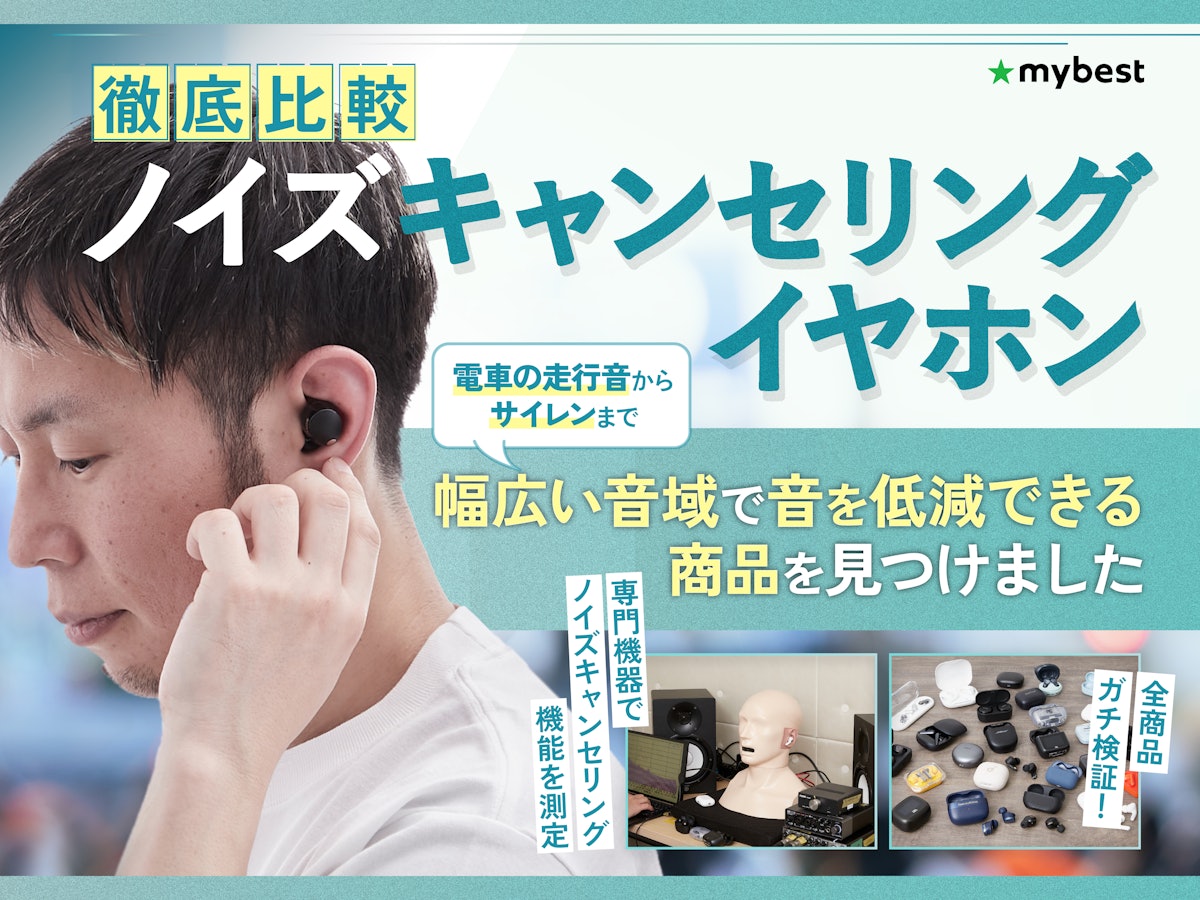
【In-Depth Comparison】Best Noise-Cancelling Earbuds Ranking【Strongest Models March 2026】
Noise-cancelling earbuds reduce ambient noise. Perfect for commutes or study focus. Sony, Apple, Bose, DENON, SENNHEISER and more.
my-best.comSound Quality and Portability
Sound character differs sharply despite both being "noise-cancelling." Earbuds sit close and play directly into the ear canal, creating sharp detail and dense bass. AirPods Pro 3's premium earbuds keep tonal center intact during commutes, packing information density despite light fit. That sealed-canal closeness suits pop and electronic music well.
Headphones—especially premium ones—excel with soundstage width and scale. Positioning room outside your ears opens up space, so the same song feels breezier, reverb spreads wider, and movies or live recordings feel more spacious. RTINGS' 2026 rankings treat WH-1000XM6 as a top all-rounder precisely because it combines quietness with this spatial openness.
Portability goes to earbuds decisively. AirPods Pro 3 at roughly 11.1 grams for both ears barely register during a 45-minute commute—hardly noticeable. Headphones claim volume in your bag and weight on your neck. But that bulk buys convenience—quick to pull out, quick to stow—making earbud commutes and headphone desk-work splits natural.
Price and Value
2026 pricing patterns are stark. Earbuds cluster around $200–300 range while headphones cluster around $300–400 range. Mybest's March earbud guide and February headphone guide show this layout clearly: people prioritizing quietness and portability flow toward earbuds; people banking on comfort and soundstage flow toward headphones.
Earbuds maximize satisfaction when "I need quiet and I travel constantly" is your scenario. AirPods Pro 3 around ¥39,800 (~$280 USD) pairs portable silence with solid ANC, matching daily mobile use perfectly. Headphones demand higher upfront cost but repay it through hours of comfort, loss resistance, and soundstage—people with long desk-work stretches recoup value faster.
Stuck between them? Commute-heavy and quiet-obsessed → earbuds; seated work + comfort and space → headphones. They're not better or worse—they're different strengths. Earbuds = "quiet you carry." Headphones = "comfortable quiet you settle into."
Choosing by Use Case
Start by splitting "what noise do I want gone" and "what sound do I want to keep." Want plane engines silenced or office hum to sink, or do you need barista calls and café chat to come through? Do you need your voice crystal-clear for video calls while cutting your room's AC? Expectations shift dramatically. Belkin clarifies this: ANC handles what you hear, ENC handles what others hear during calls. Same "noise handling," opposite roles.
That split informs these use-case categories:
| Scenario | Recommended Form/Method | Priority Specs | Watch Out |
|---|---|---|---|
| Commute/School | Fully wireless earbuds, hybrid ANC | Low-bass decay, fit stability, ambient pass-through | Full silence risks missing your stop |
| Airplane | Well-sealed earbuds or headphones, hybrid ANC | Low-frequency strength, long-wear comfort | Takeoff pressure can feel intense |
| Office/Café | Earbuds or lightweight headphones, ANC + ambient mode | Quick switching, no ear fatigue, talk-easy | Over-silencing makes you miss interaction cues |
| Video Calls/Calls | Call-mic-focused earbuds, ENC-strong | Multi-mic array, voice algorithms, wind filtering | Strong ANC ≠ clear call quality |
| Running/Outdoors | Ambient-pass earbuds, light-fit design | Natural transparency, fit security, water rating | Over-sealing sacrifices safety |
Commute/School
Train quietness hinges on cutting that wheel-rumble and air-con low tone. The moment doors close and the train moves, that floor rumble dropping makes small volume levels work. This use case heavily favors sealed earbuds—physical isolation works hard here. AirPods Pro 3 or similar build quiet easily, lasting a 45-minute commute without drain.
But commuting isn't "silence everything." Train announcements and platform sounds matter—you need those. Quick ambient mode toggle matters hugely. Nothing's transparency feature explanation shows this isn't just turning ANC off but actively bringing outside sound in for contact and safety. Commute picks need quick switching and good ambient tuning, not just raw ANC power alone.
Airplane
Planes deliver sustained engine and cabin-air noise that's textbook ANC strength. Silence that drops in gradually, letting movie dialogue through where cabin noise blocked it—flying shows ANC's clearest win. Hourlong flights suit either sealed earbuds or headphones depending on seal-vs-comfort preference.
But takeoff and descent create pressure sensitivity. Sealed earbuds feel almost plug-in-ear under pressure change, while hours in headphones spread load across your head. Shorter domestic flights might favor lightweight earbuds, while intercontinental routes suit over-ears. Long flights in earbuds drain batteries faster (AirPods Pro 3 hit roughly 8 hours ANC-on), and checking specs matters.
Office/Café
Offices and cafés aren't "go silent." Suppress keyboard click and AC hum while staying responsive when colleagues approach or baristas call your name. Ambient mode toggling beats "full silence on," and earbuds offer portability while headphones suit prolonged sit-downs. Comfortable hand-off between focus and interaction beats raw suppression strength.
This scenario prizes switching ease over anything. Earbuds shine on portability (AirPods Pro 3–sized devices let you respond without removing anything); headphones suit work-glued sessions with all-day comfort. "Focus-then-respond" setups work better with good ambient features than ultra-aggressive isolation.
Video Calls/Calls
Call settings require splitting listening-side ANC from speaking-side ENC. Mix these up and you get "I hear perfectly but they hear mush." ENC targets voice capture—mic setup, speech isolation algorithms—differently from ANC targets what you hear. Belkin separates these for good reason.
Home AC + café background noise means your mic captures everything. Call-focused earbuds with multi-mic arrays, good voice algorithms, and wind shielding matter more than ANC strength. Premium ANC doesn't guarantee call clarity—ENC design is the deciding factor here.
Running/Outdoors
Running or outdoor walking flips priorities—ambient sound beats isolation. Cars approaching, cyclists passing, traffic signals—hearing these matters for safety. Ambient pass-through quality (not just ANC off but active sound inclusion) is central. This isn't "strongest ANC possible" but "safest awareness balance."
Sweat and weather matter too. AirPods Pro 3's IP57 rating handles light rain and sweat well. Light weight (roughly 5.55g per side) prevents burden during motion. Outdoors demands less suppression and more situational awareness than any other scenario—selecting by "can I hear safely?" beats "how much does it cut?"
Reading Specs and Checking Before You Buy
Understanding dB Notation
"Reduces noise up to X dB" jumps off spec sheets but shouldn't be read as a straight strength ranking. ANC reduction varies by test frequency range, fit condition, earpod seal, and which noise is being measured—dB is a reference point, not gospel. A model strong on plane engines might barely touch conversation or dishes equally.
This framing shifts focus from "bigger number wins" to "when does quietness actually appear." Classic ANC research treats 50–500 Hz and roughly 20 dB reduction as the reference domain. Modern 20–30 dB mentions usually discuss suppressing train rumble or cabin noise in that context. Read dB figures for direction, not as absolute comparison.
Technically, standards like JEITA RC-8142 exist to keep test conditions consistent. dB isn't meaningless, but comparing without reviewing measurement methods limits precision.
Spotting ANC Method and Mic Setup
Method categories simplify to four: feedforward (external mic), feedback (internal mic), hybrid (both), adaptive (automatic tuning). Feedforward predicts noise early; feedback chases what remains; hybrid pairs both; adaptive shifts response by environment or fit.
Easy miss: method name alone reveals nothing about real-world feel. More mics help, but the split between "quiet-making mics" and "call mics" and how each signal feeds the controller matters hugely. Some specs inflate total mic count by including call-specific picks, burying the ANC mic count. Look for whether static-quiet and call-voice specs separate.
App presence drastically changes practical experience. ANC strength and ambient pass intensity being slider-adjustable (rather than locked) let you dial the same method differently day to day. Even solid hybrid designs with no app feel stuck if "today the pressure is too much" or "outdoors I need more ambient" can't be adjusted.
Ambient Pass-Through and Safety
Treat ambient mode as a separate feature from ANC off. Turning ANC off keeps the seal and housing isolation active. Ambient mode adds external-mic sound to restore voices and alerts naturally.
Safety perspective: sealing out street noise completely on platforms or crossings is dangerous. Ambient pass mattering more than suppression power here—if quality is poor, you end up pulling one earbud out anyway. Store aisles, intersections, and run routes demand hearing approach cues and calls clearly. Poor transparency forces real-world workarounds.
Store demos should include ambient quality testing and app adjustment ranges, not just ANC strength checking. Author preference: touching ambient control shifts and testing call-ease before purchase clarifies actual fit.
Battery/Codec/Multipoint
Battery labels need clarity on "buds alone" vs. "buds + case." Actual use hinges on single-bud runtime. AirPods Pro 3 giving 8 hours ANC-on and 10 hours ambient-on tells you mobility limits clearly. Codec menus (AAC, LDAC, aptX variants) matter only if your paired phone/laptop supports them—unsupported formats evaporate. Check compatibility, not feature lists.
Multipoint (connecting two devices simultaneously) pays huge dividends if you swap between phone and PC regularly. Manual switching every time feels like a burden faster than you expect. Check whether simultaneous support is clean or if audio cuts during switching—real behavior matters beyond spec-sheet listing.
IP Rating Basics
IP ratings from IPX1 to IPX8 scale from droplet-resistant to submersion-safe. Two-digit IP54/IP57 format shows both dustproofing (first digit) and water (second digit). Light commute sweat needs lower ratings; running or rain needs higher. Check what actually pairs with your weather and activity level—dB and method matter little if moisture kills the device.
Summary
ANC excels against low steady tones; method differences directly affect commute/work/call ease. dB ratings guide the conversation but real satisfaction comes from fit and your actual location. Pick earbuds for mobility and quick quiet, headphones for hour-long comfort and space. Value against price isn't measured in dB but in how friction-free the device fits your daily rhythm.
Next steps: narrow your primary use ("mobile," "work," or "calls"), select earbud or headphone shape, confirm ANC method and ambient features, then visit a store to test fit, pressure feel, and app adjustments. See our Wired vs. Wireless Earbuds comparison and AirPods Pro 3 Review for added decision-building details that round out use-case fit.
Related Articles
The Complete USB-C Cable Buying Guide: Same Plug, Wildly Different Performance
The Complete USB-C Cable Buying Guide: Same Plug, Wildly Different Performance
A clear breakdown of USB-C cable standards, transfer speeds, and charging capabilities — plus how to pick the right cable for what you actually need.
Wired vs Wireless Earphones: Sound Quality, Latency, and Everyday Usability
Wired vs Wireless Earphones: Sound Quality, Latency, and Everyday Usability
The real question isn't which is better — it's which one actually fits how you listen. At the same price point, wired still wins on raw audio quality and latency. If lip-sync drift in movies or split-second timing in FPS and rhythm games matters to you, that gap is real and hard to ignore.
What Is USB PD? Understanding Wattage and Compatible Devices
What Is USB PD? Understanding Wattage and Compatible Devices
Just because a device has a USB-C port doesn't mean it supports USB PD fast charging. Confusing the two leads to the classic trap: buying a 65W charger and getting only 30W out.
The ¥30,000 (~$200) Desk Upgrade: How to Prioritize Across 3 Plans
The ¥30,000 (~$200) Desk Upgrade: How to Prioritize Across 3 Plans
How much your desk can change on a ¥30,000 (~$200) budget depends heavily on the order in which you buy things. Whether you want to ease shoulder and back pain, clear up desk clutter, or make a small room more workable, the right investment changes accordingly.